Every family has its own Christmas traditions. Maybe yours involves decorating the tree together, spending hours in the kitchen, or trying to get everyone in one photo before dinner. And if you have a dog or cat, chances are they're part of those traditions too.
Your dog might be following you around while you prepare dinner, hoping something will fall off the counter. Your cat might have already claimed the space underneath the Christmas tree, or decided that the wrapping paper is the best present of all.
Christmas can be a lovely time to spend together, but it also brings quite a few changes for our pets. There are more people around, unfamiliar smells, different routines and plenty of tempting things to investigate. A little preparation can make a real difference and help everyone enjoy the holidays, including the four-legged members of the family.
Why Christmas can be a little overwhelming for pets
While we look forward to the lights, visitors and celebrations, Christmas can feel quite different from a pet's perspective.
The living room suddenly looks unfamiliar, the house is full of people, and there's a lot more noise than usual. Even everyday things like feeding times or walks can get pushed aside when there's so much going on.
Some dogs become overexcited when guests arrive, while others prefer to keep their distance. Cats might spend more time hiding or become particularly interested in all the new decorations around the house.
There's nothing unusual about these reactions. Dogs and cats generally feel most comfortable when they know what to expect. Keeping a few familiar things in place can help them settle, even when the rest of the household is busy.
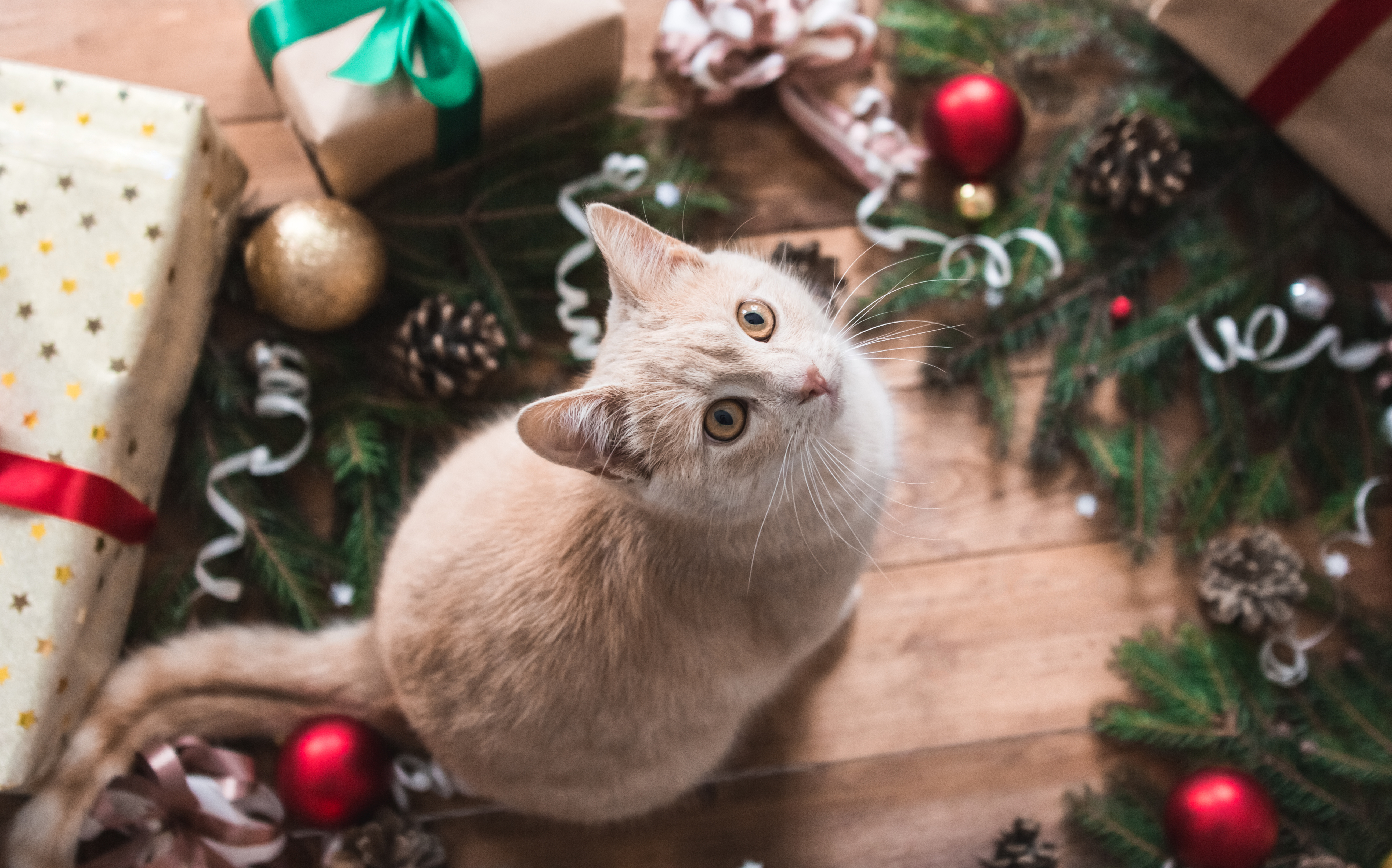
Save your emergency vet's number: Before the holidays begin, save the number of your nearest emergency veterinary practice. Not every vet operates their usual hours over Christmas, so it's worth knowing where to go if something happens.
A few simple ways to make Christmas easier for your dog or cat
You don't have to change your Christmas plans completely to make your pet feel comfortable. Often, it's the little things that matter most.
Try to keep their usual routine. Christmas Day is no reason to skip your dog's morning walk or move your cat's dinner several hours later. After all, some traditions are worth keeping, like your dog's favourite daily walk, even on Christmas Day! Keeping feeding times, walks and playtime as close to normal as possible gives your pet something familiar to rely on. If you have a dog, make sure there's still time for a proper walk before the celebrations begin.
Make sure they have somewhere quiet to go. Not every pet wants to be in the middle of the festivities. Set up a comfortable spot in a quieter room where they can rest without being disturbed. This could simply be their usual bed, a favourite blanket or a familiar corner of the house. Cats often prefer somewhere elevated, such as a cat tree or a favourite shelf. Make sure their litter box is also somewhere peaceful and accessible.
Give visitors a little guidance. It's easy to forget that not every dog or cat enjoys meeting new people. Ask your guests to give your pet some space and let them approach when they're ready. This is particularly important with children, who might be very excited to see their furry family member. Make it clear that when your pet retreats to their quiet spot, they should be left alone.
Don't forget about the noise. Between conversations, music, doorbells and children playing, a Christmas gathering can get quite loud. Some pets will happily join in, while others may find it overwhelming. Keep their quiet space away from the busiest areas and consider putting on some gentle background music.
Give them something to do. While everyone is opening presents or sitting down for dinner, your pet might appreciate a little distraction of their own. A chew toy or snuffle mat can keep a dog occupied, while cats might enjoy a favourite toy or some time with a feather wand. And if you have a cat, don't be surprised if the empty gift box turns out to be the most popular present.
If you're travelling, bring a little bit of home. Spending Christmas somewhere else? Pack your pet's usual food, bedding and a favourite toy. Familiar smells can help them settle into an unfamiliar environment. If you're travelling with a cat, think carefully about whether taking them along is really the best option. Many cats are more comfortable staying at home, with someone they know coming by to feed and look after them.
And if your furry friend is joining you on your Christmas travels, there's one less thing to worry about. Trupanion offers up to 90 days of worldwide coverage, so your pet can stay protected even when you're celebrating the holidays away from home.
Your first Christmas with a puppy or kitten
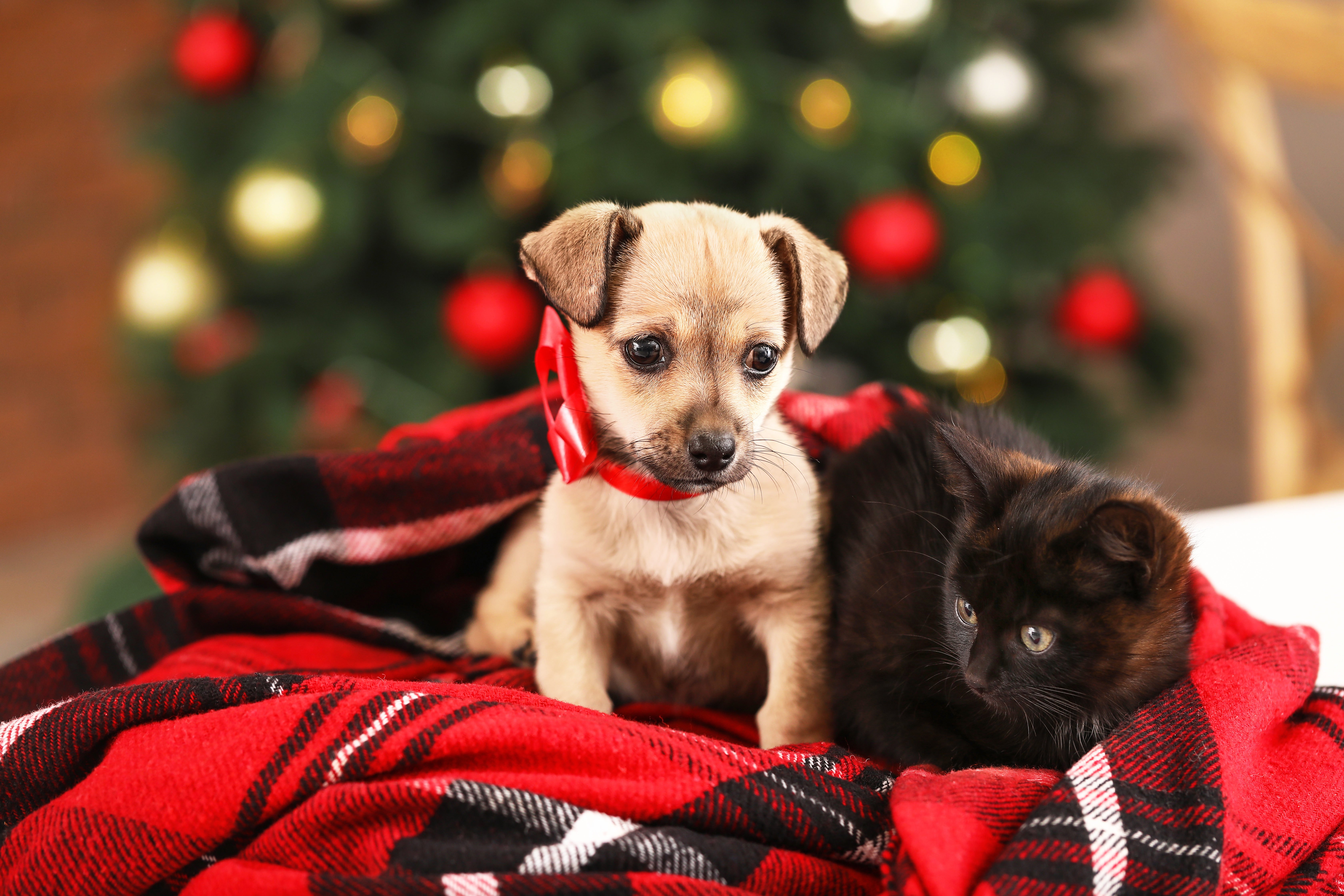
If you've welcomed a puppy or kitten into your family this year, Christmas will be a completely new experience for them. There's a lot to explore, from the Christmas tree and decorations to all the new people coming through the door.
Young pets are naturally curious and tend to investigate the world with their mouths. That means tinsel, ribbons, electrical cables and small decorations can quickly become tempting toys. Keep anything potentially dangerous out of reach and don't leave your puppy or kitten unsupervised around the Christmas tree.
It's also important to remember that young pets need plenty of rest. With so much happening around them, they can easily become overstimulated. Give them time to sleep and explore at their own pace.
And while you're getting ready for your first Christmas together, it's worth thinking about their long-term health too. Taking out pet insurance with Trupanion early can help avoid exclusions for conditions that develop before cover begins.
What can't dogs and cats eat at Christmas?
It's tempting to share a little something from the Christmas table, especially when your dog is sitting beside you looking hopeful. But many festive foods that we enjoy aren't suitable for dogs and cats.
A small treat might seem harmless, but some ingredients can cause serious problems. It's worth making sure everyone in the household knows what your pet can and cannot eat, particularly if you're hosting guests.
Keep the following foods away from your pet:
Chocolate: The darker the chocolate, the more dangerous it can be. Even relatively small amounts can be harmful.
Grapes and raisins: These are found in festive favourites such as stollen and fruitcake and can be toxic to dogs.
Cooked bones: Goose and duck bones can splinter and cause injuries.
Fatty leftovers and gravy: Rich, fatty foods can upset your pet's digestive system and may contribute to pancreatitis.
Onions and garlic: These can be harmful to both dogs and cats.
Xylitol: This sweetener, sometimes found in sugar-free products, is particularly dangerous for dogs.
If your pet eats something they shouldn't, don't wait for symptoms to appear. Contact your vet for advice.
Which Christmas decorations and plants are dangerous?
Food isn't the only thing worth keeping an eye on. Christmas decorations can be just as tempting, particularly for curious puppies and kittens.
A few things to watch out for:
Tinsel and ribbons: Cats are especially attracted to shiny, moving objects. If swallowed, these materials can cause serious intestinal problems.
Christmas trees: Make sure the tree is stable, particularly if you have a cat that likes to climb.
Glass baubles: Broken ornaments can cause cuts to paws and mouths. Shatterproof decorations are a safer choice.
Candles and electrical cables: Keep lit candles out of reach and make sure cables are secured or covered.
Festive plants: Poinsettias, mistletoe, amaryllis and lilies can all be harmful to pets. Lilies are particularly dangerous to cats and can cause severe kidney damage.
A good rule is to keep decorations and food out of reach wherever possible.
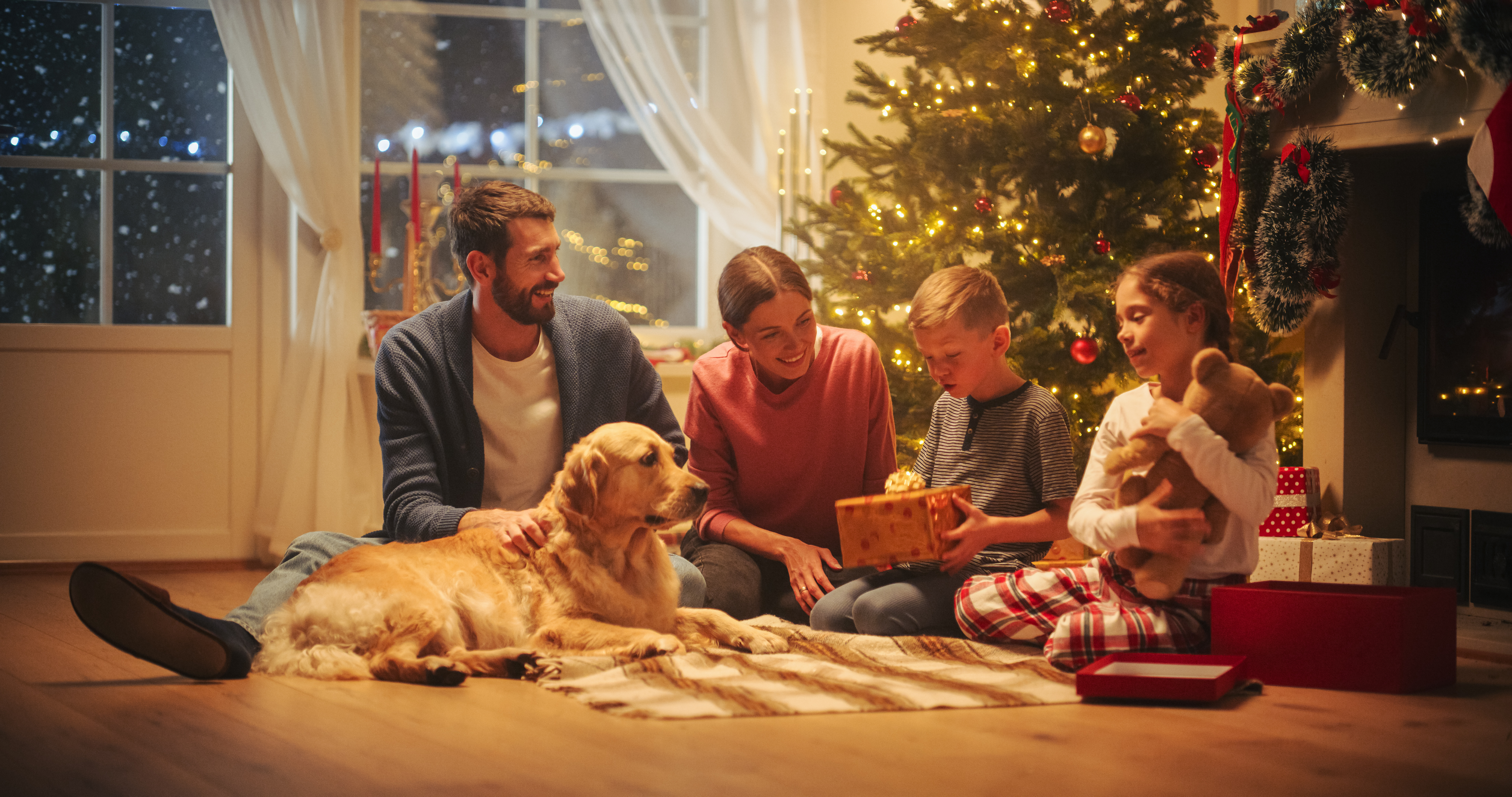
Getting everyone into the Christmas photo
Getting a dog or cat to sit still for a family photo is often easier said than done. Someone looks away, someone gets distracted, and there's usually at least one blurry tail in the picture.
But you don't need a perfectly posed photo to capture a lovely memory. A few small things can make the process easier:
Let them burn off some energy first. A walk or a little playtime beforehand can help your dog settle down.
Have a favourite treat or toy nearby. You can use it to get their attention, ideally just above the camera lens.
Keep things comfortable. If your pet doesn't like wearing costumes, don't force it. A simple festive bandana is more than enough, and even that is optional.
Get down to their level. Rather than trying to position your pet, sit on the floor or take the photo where they already feel comfortable.
Don't make it a long session. Take a few pictures, give them a break and try again later if needed.
And if your dog won't stop moving or your cat decides the camera isn't worth looking at, that's perfectly fine. Sometimes the photos that don't go to plan end up being the ones you treasure most.
Because they're family
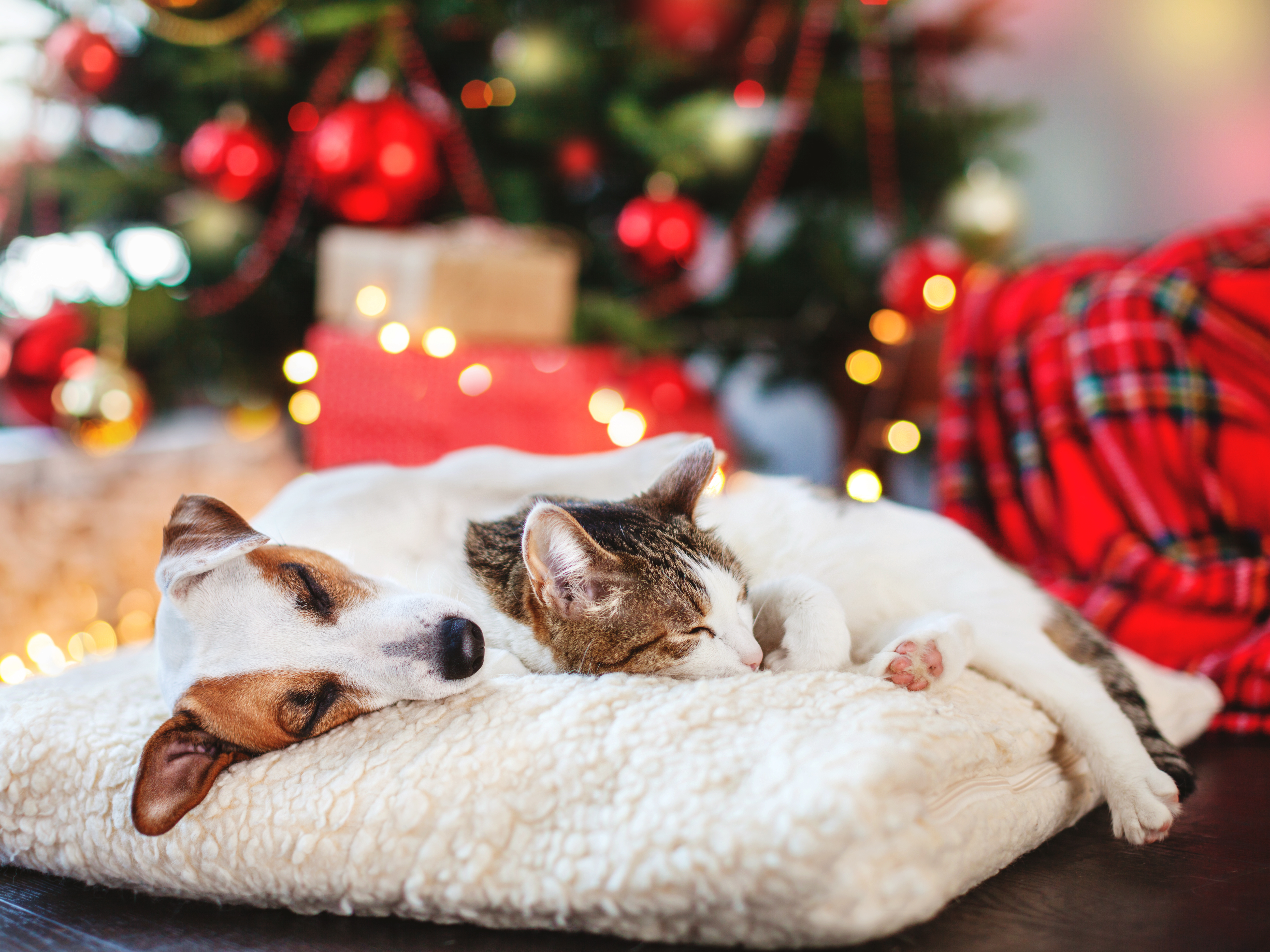
Christmas doesn't have to be perfect to be special. There might be wrapping paper all over the living room, a dog trying to sneak a bite of dinner or a cat sleeping right where the presents should go.
What matters is that everyone feels at home, including the pets who are part of the family. A little preparation, some familiar routines and a safe place to retreat to can go a long way towards making the holidays enjoyable for them too.
From all of us at Trupanion, we wish you and your whole family a wonderful Christmas!
Key takeaways
Keep your pet's routine as normal as possible and give them a quiet place to retreat.
Keep chocolate, grapes and raisins, cooked bones, onions, xylitol and festive plants out of reach.
Never leave puppies and kittens unsupervised around the tree, tinsel or cables.
Häufige Fragen
Yes. Chocolate contains theobromine, a substance that dogs and cats cannot break down efficiently. Dark chocolate generally contains higher levels and is particularly dangerous. Even a relatively small amount can cause serious problems, especially for smaller dogs. If your pet has eaten chocolate, contact your vet immediately.
Ready for the unexpected
With Trupanion, you can have financial support for eligible unexpected accidents and illnesses. At participating veterinary practices, Trupanion can even pay the vet directly, helping you focus on your pet's care rather than worrying about paying the full bill upfront.
How direct vet payment works